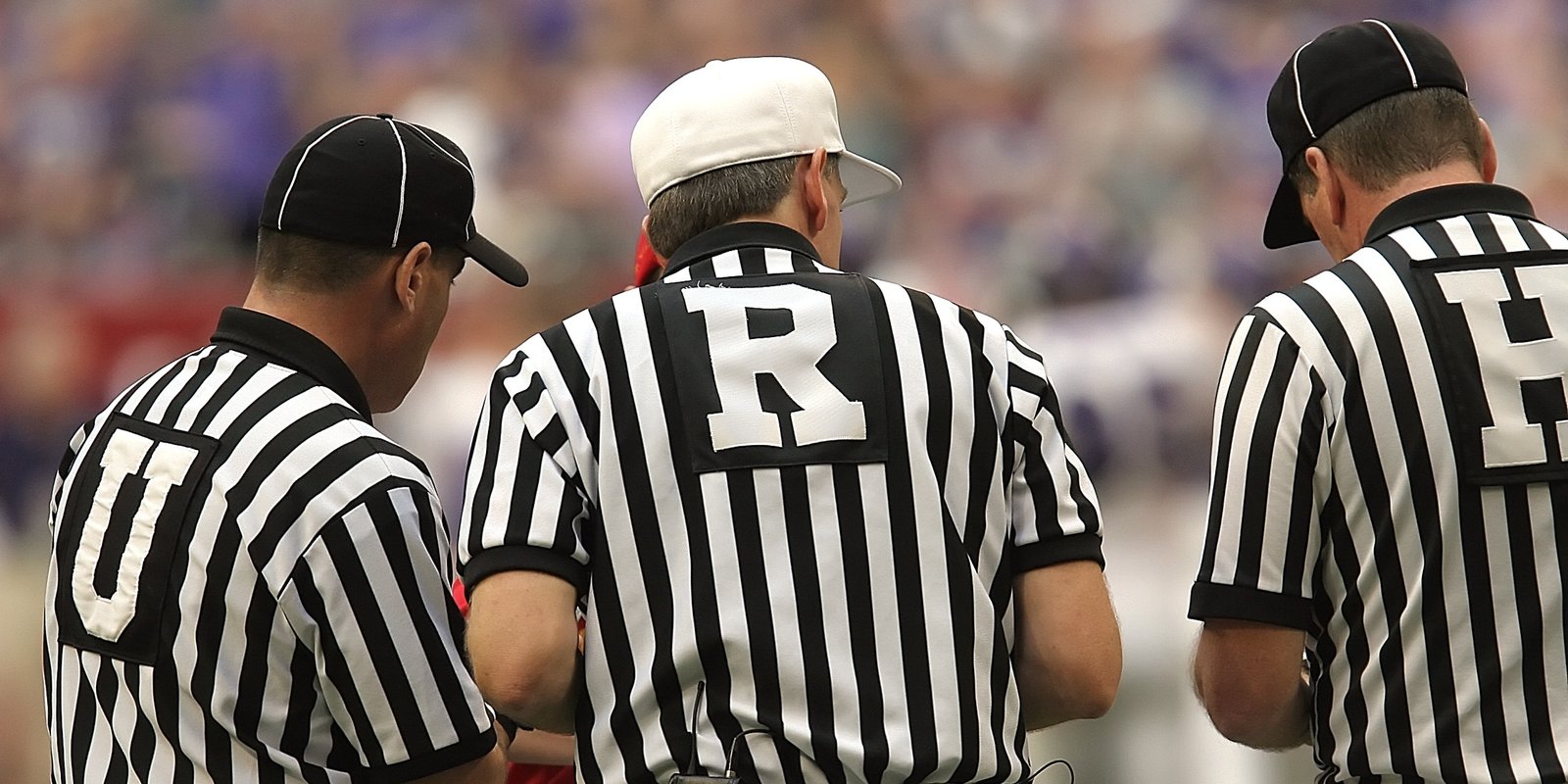
What the absolute f$%* is going on out here?
POST-WRITING NOTE: Chris Vannini of The Athletic has a superb post on this. If you look at the Tweet, NBC’s clock likely has some lag, perhaps it always did. It only came out because the Big Ten is using fancy new technology that is more accurate. Guidance is coming down from the NCAA to put a protocol in place of following the broadcaster’s clock because not everyone has the fancy new technology. I’m choosing not to completely rewrite this because there’s nothing more to say.
I’m tired. I’m a little confused. And quite honestly, I’m enjoying every second of this. I’ve learned so much about replay review systems and high-level live sports production as a result of Michigan’s controversial win over Western Michigan.
NBC probably screwed this up. We’ll get to that.
I love the hell out of rule technicalities and the fuzziness in the middle. So let’s take a second (heh) and figure out what the hell is going on.
The Call on the Field
In case you don’t know, here’s the deal. Western Michigan is up 12-7, Michigan is on a last-minute drive to try and pull a rabbit out of their ass.
Underwood completes a pass just past midfield and spikes the ball to stop the clock. The referees reset the clock to nine seconds. Michigan opts to go for the Hail Mary attempt right then and there. Underwood takes the snap, scrambles around, and heaves it deep. On the broadcast feed, that play runs down the clock to zero. Western bats the ball away, game over.
Except it wasn’t. The play is under review..
Sidebar: I was ready for this thing to be over and move on to a time-honored tradition: complaining about how bad Michigan is with all of my fellow alumni friends. Hell, I’d already started.
On the replay system the referees use on the field, the embedded clock showed there was still one second left when a Western Michigan defender appeared to touch the ball. Said defender started out of bounds. Ergo, the clock stops when he touches it, one second back on the clock. Important note: There’s no tenths on a football game clock. You get zeroes when it is actually zero, no rounding down.
Then, it happens. Michigan actually manages to pull the rabbit out of their ass. JJ Buchanan rises up like a freaking kaiju and pulls down an insane catch that had me screaming. Touchdown, game over, Michigan wins.
You see what this looks like, right?
As a Michigan fan, I cackled. As a fan of chaos, I cackled. As someone who loves seeing underrated teams get rewarded for their efforts, I felt for Western Michigan. Hell, when I went to bed that night, I was sure that I had witnessed the heist of the century.
I woke up to a different story. The Big Ten Conference (who supplied the referees and replay system for this game) released the footage of their review process, which showed the single tick of the clock remaining. In their statement, the conference stated, “Eighty-five minutes prior to the game, all broadcast cameras used for the replay system, including the camera on the game clock, are synced using a strobe system to ensure all cameras are aligned.”
The Mid American Conference and WMU subsequently accepted the explanation and moved on. For a couple days.
On Tuesday, the MAC changed course and submitted an appeal for the game to be counted as a Western Michigan win for postseason consideration.
The rules, mate
Here’s a version of the 2026 NCAA Football rulebook. The MAC’s claim about replay protocol seems to stem from this rule: Rule 12, section 6, article 1, subsection C.
“All reviews shall be based upon the video evidence provided by and coming directly from the televised production of the game or from other video means available to the replay official that is also available to the television producer.”
I’m not a lawyer, and this isn’t a court of law. The rule states that replay reviews are based on “video evidence provided by and coming directly from the televised production of the game.”
If they’re using different feeds of the clock, Western won, and there’s no shady business about changing the result. The second Hail Mary should never have happened, let’s move on. That doesn’t appear to be what happened.
The more likely case is they were using the same feed but there was a synchronization issue. Technically, NBC would have had access to the footage the replay officials were using. And someone’s sync was wrong. I don’t know what the correct interpretation is for that, but I don’t like the idea of using a faulty feed for a decision.
I’ve seen grainy footage that has been posted by fans in attendance. I’ve looked at frame-by-frame analyses that people much smarter than me have put together. It certainly seems like the first play took less than nine seconds.
Michigan probably won. The replay system was probably more accurate to the stadium clock. At least I want to believe that because it intuitively makes sense. I understand why NBC’s footage could be out of sync. There’s nine million things happening during a live sports production, it would make sense that they believed in their system which has never been notably faulty before this game.
That doesn’t absolve NBC.
NBC, you just made the list
The core of the confusion comes from NBC rules analyst Terry MacAulay, who said during the broadcast that the network’s clock and game cameras were properly synced.
I don’t know what conversations MacAulay had with the NBC production team, but he was told the cameras were synced. He doesn’t have any other information to go with, and so he said it. It’s live TV, people have been wrong on live TV all the time.
The day after the game, NBC issued a statement via their studio host John Fanta that the network wasn’t the keeper of game time, and that the Big Ten and referees do that. But that’s only a half-truth.
You’ve got to at least try and be transparent about your broadcast. NBC’s statement via Fanta was a big nothing-burger. They seem to want to wash their hands of this even though the rules pretty clearly state that they have a part to play.
We’ve got to start asking bigger questions about the relationship between broadcasters and the leagues they license rights from. If you’re gonna let a rules analyst kick up all this controversy, you’ve got to take ownership of your role. The rules mandate that the television networks have a role in this. Trying to back away from that by pawning this off on the conference and the referees just isn’t right.
For what it’s worth, Michigan rightly dropped out of the Associated Press Top 25 poll. They’ve got a game against #11 Oklahoma, and… what’s the nicest way I can say this?
I am not expecting a competitive match-up. Go Blue, I guess.
Leave a Reply